

FOOTBALL PEOPLE TALKING ABOUT BIG DATA
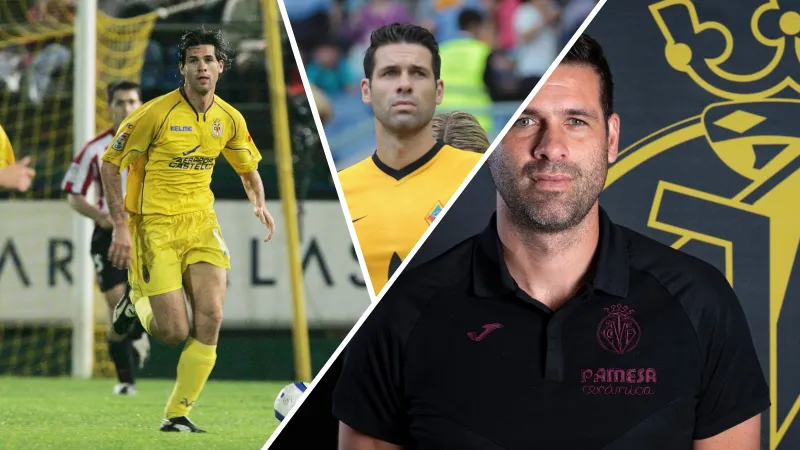
Today we have with us César Arzo Amposta (Vila-real, 1986). A former First Division player from the Villarreal academy. He made his first-team debut in the top flight in the 2002-03 season alongside team-mates of the calibre of, for example, Palermo. He has played for many teams and in many countries, such as Greece and Israel. After 15 years at the top, he hung up his boots at Nástic on medical advice; his knees would not have lasted much longer. In 2019 he moved into politics, standing on the electoral lists of his home town. He is currently a coaching educator at the Villarreal academy and has completed an MBA in Big Data. A man of the world and of football who gives us his view of the new digital and analytical era in the king of sports. Let’s begin!
Question (Q): Hi César, tell us what motivated you, after years as a professional on the pitch, to move into the world of data analytics.
Answer (A): “After retiring from the pitch, I have always been, and wanted to be, linked to the world of football and to be able to contribute my bit from the outside. These new technologies open up a new area of knowledge, undiscovered until now. They can make people understand football in a different way or from a different perspective. For me it is an area of enormous interest. In some way I felt attracted by the idea of being able to contribute new ideas that help us understand football better. We may be facing a new era; how could I live with my back turned to it?”
Q: How well established do you think the technologies, tools and methodologies related to big data are in the world of football?
A: “In the professional world, even in semi-professional categories, it is hard to find a club that is not, one way or another, trying to exploit information on players and competitions supplied by big data platforms. There is currently a wide variety of providers. I think that, in Spain at least, we are in a first phase of exploration. I have had the opportunity to live through the radical technological change first-hand. I remember when the only technology within our reach was a VHS tape. The coach had the key minutes he wanted to analyse written down on a piece of paper. We made the leap to smart cameras and now we have a multitude of devices that measure many facets of the player and the game. This will undoubtedly grow; it only needs to be settled and put in order.”
Q: Do you think there is a long way to go, or is the market, on the contrary, mature? Is it a passing fad? Is there mistrust among the different players about this type of technology?
A: “Has it been a passing fad in other companies and other sectors? Clearly not. They have been working with it for years and with successful projects; obviously it is not something passing. The road is long, without doubt. I still find it hard to understand in which areas of action we can implement this technology, where we can benefit, what its horizon is. I think the limit is not known and I do not know whether we will get to see it. Seeing all this potential, it looks as though the road will not be short. It is not just about producing descriptive reports or filtering tools. It is about discovering knowledge, and for that you have to train a lot, learn a lot, fail and try again. As for mistrust, I think there is a bit of everything, as surely happens in all companies. Mistrust is born above all in management positions, and that is crucial for success.”
“In general terms I am seeing great interest in acquiring knowledge through training programmes or through companies such as Alebia Sports Analytics. I even see that, in small teams, people are making their first attempts on a self-taught basis. There are still people who are reluctant and who keep turning their backs. There is the old school and the new school; it always happens when a technology of this level disrupts. Those who rely everything on their experience and their method are decreasing. I think this technology has to be understood as an aid and a complement to each person’s work. A clear example is in scouting: you have to keep watching matches, live as well. You will need to know other aspects of the player and their environment that Big Data cannot give you. But in the first phases of scouting this technology can be of great help.”
Q: In which area are these tools being used most? Sporting management, medical department, scouting, training, physical performance…
A: “I think the area where most is being invested or focused is physical performance, in monitoring each player. Fitness coaches are increasingly aware of this technology. There is a positive obsession with finding the optimal physical state of each player and analysing every parameter that may have an influence. I think advances will go in every direction, but the physical side is changing a lot in this respect and may be the most mature. It may also be that the next steps are to analyse micro data, to analyse the patterns in each of the actions within a football match: transitions, moves, cover… It makes sense: once we feel comfortable with global statistics, with eventing, it is logical to go deeper into the patterns of each zone of the game, each line, each move.”
Q: How is the use of this technology introduced into the methodologies of each discipline?
A: “Well, above all, with a lot of training. We are facing a very strong digital transformation. Nobody is born knowing, especially those of us who have a few years behind us. The coach, the fitness coach, the sporting director, the scouts have to acquire digital skills, basic notions of statistics and advanced analysis, each at their own level. I think a logical approach is to tackle a specific problem, something we want to solve, something simple that data can give us the solution to. In parallel, we will try to gain knowledge about which data could be interesting in our field and which are affordable and manageable. Secondly, train yourself or ask for help to obtain that data or to be able to handle it, to cook it. In that learning you will see how ideas open up and what before seemed impossible will end up being achievable.”
Q: Where do you think there will be most growth in the coming years? What is currently being invested in?
A: “Although in my opinion the market is not yet mature, I think that, at least, the benchmark teams in this field have already gone through a first phase, that of using data as a service. The offer is very good, there are many big data providers, and there are already a few years of experience using third-party tools. I think growth can lead to building an in-house infrastructure inside each club. I think the path may be for each club to have a set of tools, systems, hardware and software that generate data and are directly owned by the clubs themselves. This will be accompanied by a team of experts, a department of its own. Clubs will generate, and are already generating, analytical information that will complement what is extracted from external sources.”
Q: Do you think clubs have a long-term strategy for setting up big data and business intelligence departments as a fundamental pillar of their structure?
A: “Well, in a market that is still exploring, it is hard to think long term, although there are well-known success stories such as Sevilla’s. Obviously, we take the big teams out of this equation. What is clear is that almost any professional club is using big data techniques, mainly with third-party tools, usually from data providers. Techniques come out of the use of tools, and prepared clubs will put data-related strategies in place. I would encourage clubs to start preparing themselves, as soon as possible, in training and technological and digital knowledge. It is within everyone’s reach, not just the big ones.”
Q: In your opinion, what considerations should be taken into account for a club to plan this strategy properly?
A: “First of all, that the people in charge at least believe in it, let themselves be advised or have some knowledge. It must also be borne in mind that the exploitation of data and everything it entails is a cross-cutting discipline from which all the departments of a company, in this case a club, have to benefit. I think clubs, each within its means, have to think about building a solid big data department. In this department there must be experts in data handling. And all of it within a strategic plan for digital transformation. A department that supports the rest of the departments, not just the sporting ones.”
“Obviously, the weight of the sporting directorate is very great and it is normal for this department to report to it. A leader is needed, and for that sporting directors have to train in Big Data skills. The talent that may exist in the club in relation to this discipline must also be considered, and help sought outside to develop profiles and knowledge that then stays in-house.”